Planning & production
Explainer Video Production: A Practical Guide for Small Businesses
Plan an explainer video that makes your service easy to understand. Get practical examples, a simple production brief, and a clear guide to the process.
Capri Video · Updated · 7 min read
Key takeaways
- An explainer video turns the question customers keep asking into a short story; for a small business, start with one offer, one audience, and one question.
- Before scripting, write down what the customer will understand after watching and what they should do next, then reconsider any line that supports neither.
- For an initial service overview, plan roughly 45 to 90 seconds as a starting range, not a rule every topic must follow.
- Your brief should cover audience, question, offer, facts, tone, action, placement, and materials, plus a few customer questions in their original wording.
Your customer has a question. You have probably answered it a hundred times.
How does the service work? What happens after I contact you? Is this something your business can help me with?
An explainer video turns that familiar conversation into a short, useful story people can watch before they reach out. It gives you a way to explain your service consistently, whether someone visits your website during business hours or finds it long after you have closed for the day.
For a small business, a sensible starting point is one offer, one audience, and one question worth answering. This guide shows you how to turn that into a production brief and a finished video with a clear purpose.
What is an explainer video?
An explainer video uses a combination of visuals, movement, and often narration to make an idea easier to understand. Businesses use explainer videos to introduce services, show how a process works, or answer questions that come up before a purchase.
An animated explainer video uses illustrated or graphic elements to tell that story. For example, a moving calendar can show how appointments are scheduled, while a simple sequence of rooms can explain the scope of a cleaning service.
The useful question is what the viewer should understand by the end. “We want a video about our company” leaves a lot open. “We want homeowners to understand what happens during an HVAC maintenance visit” gives the project a direction.
Choose a job for the video
Start with a moment when a potential customer needs help deciding what to do next.
Swipe sideways if needed to read the full table.
| Business | Customer question | Useful video topic |
|---|---|---|
| HVAC contractor | What happens during a maintenance visit? | The appointment process and the work included in that service. |
| Home-care provider | How do we begin discussing support? | The first conversation and the steps that follow. |
| Bookkeeping service | What information do you need from us? | How new-client onboarding works. |
| Scheduling software | How does this fit into our daily routine? | The journey from a booking request to a confirmed appointment. |
Choose the example closest to a question you hear repeatedly. Then narrow it further if necessary. A video about the first conversation with a home-care provider should not also try to explain every available service and every possible care arrangement.
Write the promise before the script
Finish this sentence: “After watching, the customer will understand…”
For a bookkeeping service, that might be: “After watching, the customer will understand how to prepare for our onboarding meeting.”
Now add the action: “They will know how to request that meeting.”
These two sentences become a useful editing tool. If a line in the script does not help explain the process or prepare the next step, consider whether it belongs elsewhere.
What happens during explainer video production?
Production brings several pieces of work together. Understanding them helps you supply the right information and review the result.
1. The brief establishes the facts
You describe the audience, the service, the main benefit, and the intended use. You also provide details that must be accurate, such as the steps customers actually follow and the terms you use for your services.
2. The script gives the explanation a shape
A simple script structure is a recognizable situation, your approach, the practical benefit, and a next step. Write for speech. Read the draft aloud and notice where a sentence becomes difficult to follow.
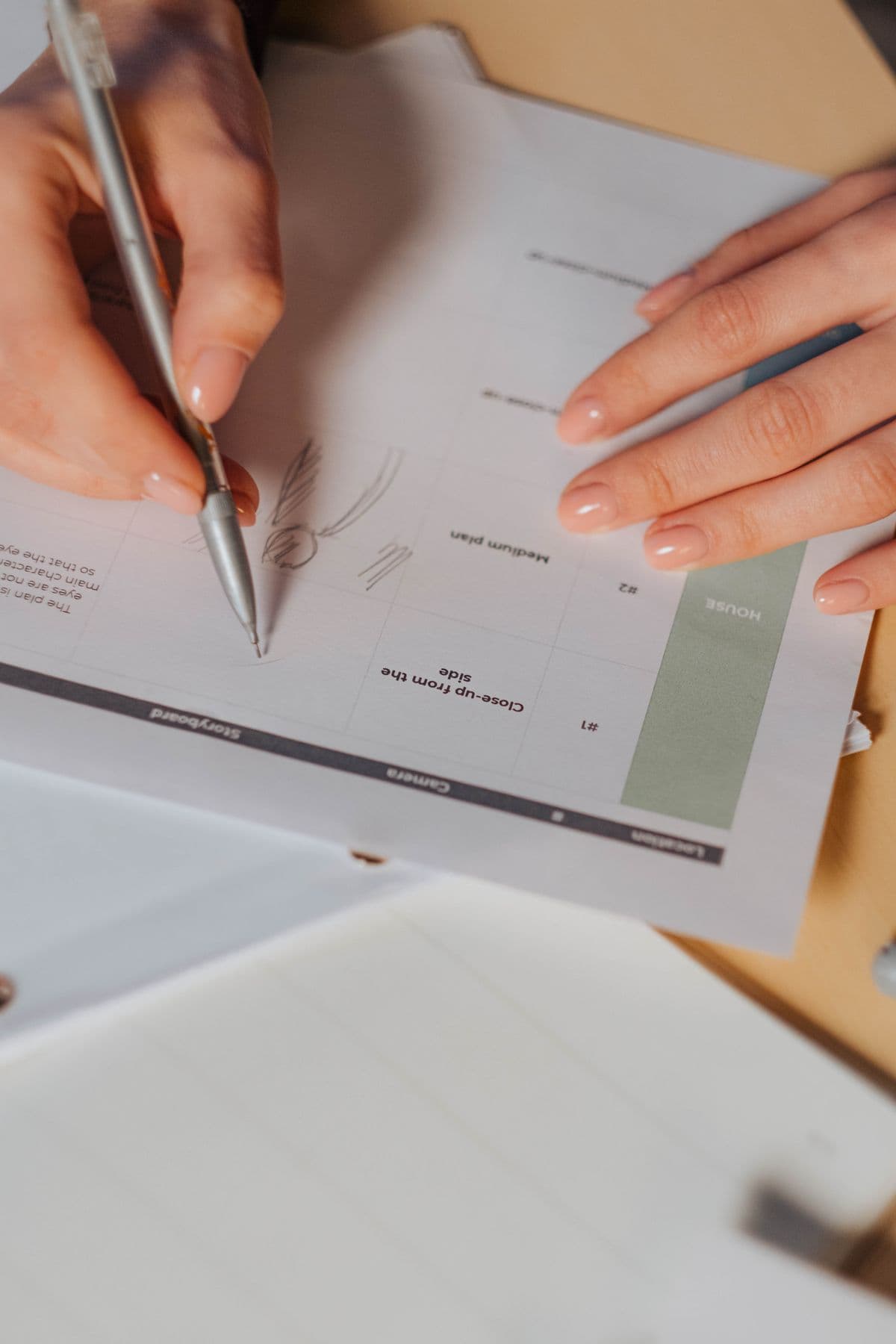
3. A scene plan connects words and pictures
Each scene should show something that helps the narration. If the script describes a booking confirmation, show the confirmation arriving. Avoid filling the frame with a paragraph that repeats everything the voice is saying.
4. Visuals, animation, and voice bring it together
The pace should give viewers time to understand each idea. A calm, approachable voice may suit a personal service; a more energetic delivery may suit a straightforward product introduction. The right choice depends on your audience and message.
5. The finished video gets reviewed
Watch for factual accuracy, pronunciation, readable text, and a clear ending. View it at the size your customers are likely to see. Details that look comfortable on a large monitor can feel cramped on a phone.
A brief you can complete without a marketing department
Collect the following information in one place:
- Audience: Who needs this explanation, and what do they already know?
- Question: What is the one question the video should answer?
- Offer: Which specific service or product are you explaining?
- Facts: What steps, names, and details must be correct?
- Tone: How would you talk to this customer in person?
- Action: What should the viewer do next?
- Placement: Where will the video be used?
- Materials: Which logo, colors, and relevant product images can you supply?
Include a few customer questions in their original wording. Those phrases often help a writer make the opening feel familiar and relevant.
Next, plan an animated marketing video around the question your customers need answered.
How long should the video be?
For an initial service overview, use roughly 45 to 90 seconds as a planning range. This is a starting point for the script, rather than a rule every topic must follow; our guide to explainer video length has benchmarks for other uses.
Read the narration aloud at a comfortable pace. Then allow time for viewers to take in what appears on screen. If a scene needs three explanations to make sense, you may need to simplify it or split the topic into separate videos.
Use these questions to choose an explainer video company that fits your project.
How Capri Video approaches production
We believe more small businesses should be able to explain their value in their own tone and language. Our production model is built around that goal.
Capri Video focuses on a small selection of formats and voices. AI helps with storywriting, and people provide the final touches and fixes before delivery. This focused approach reduces production time and cost and supports our reviewed first draft within 24 hours.
Your first reviewed, watermarked draft arrives within 24 hours after you submit your website link. You can then use the three included revision rounds. The final delivery date depends on that feedback. We agree timelines for custom packages individually.
The limited format range gives the process a clear structure. Your customer situation, service details, and language give the story its identity.
Put the video where the question comes up
A service explanation belongs near the service it describes. An onboarding video belongs where new customers begin. A video answering a question about a proposal can be useful alongside that proposal.
Make the next action easy to find. If the film invites viewers to request a consultation, place the request link near the player. If it explains a product feature, connect it to the relevant product information.
When you review the results, look at the conversations that follow as well as views. Are people asking more specific questions? Do they understand what happens next? That feedback can help you decide which explanation to create next.
Frequently asked questions
Do we need to appear on camera?
An animated video can use illustrations, graphics, text, and narration. Your team can contribute the knowledge without appearing in the film.
Can one video explain all of our services?
It can introduce a range, but a focused video usually gives you more room to explain one offer properly. Decide whether the viewer needs a general introduction or help with a specific decision.
Will an explainer video guarantee more sales?
No individual video can guarantee sales. It can support understanding and a useful next step; results also depend on your offer, audience, website, and follow-up.
Turn your next customer explanation into a video
You already know your service. Capri Video helps turn that knowledge into a clear story through AI-assisted writing, selected formats and voices, and human finishing before delivery.